
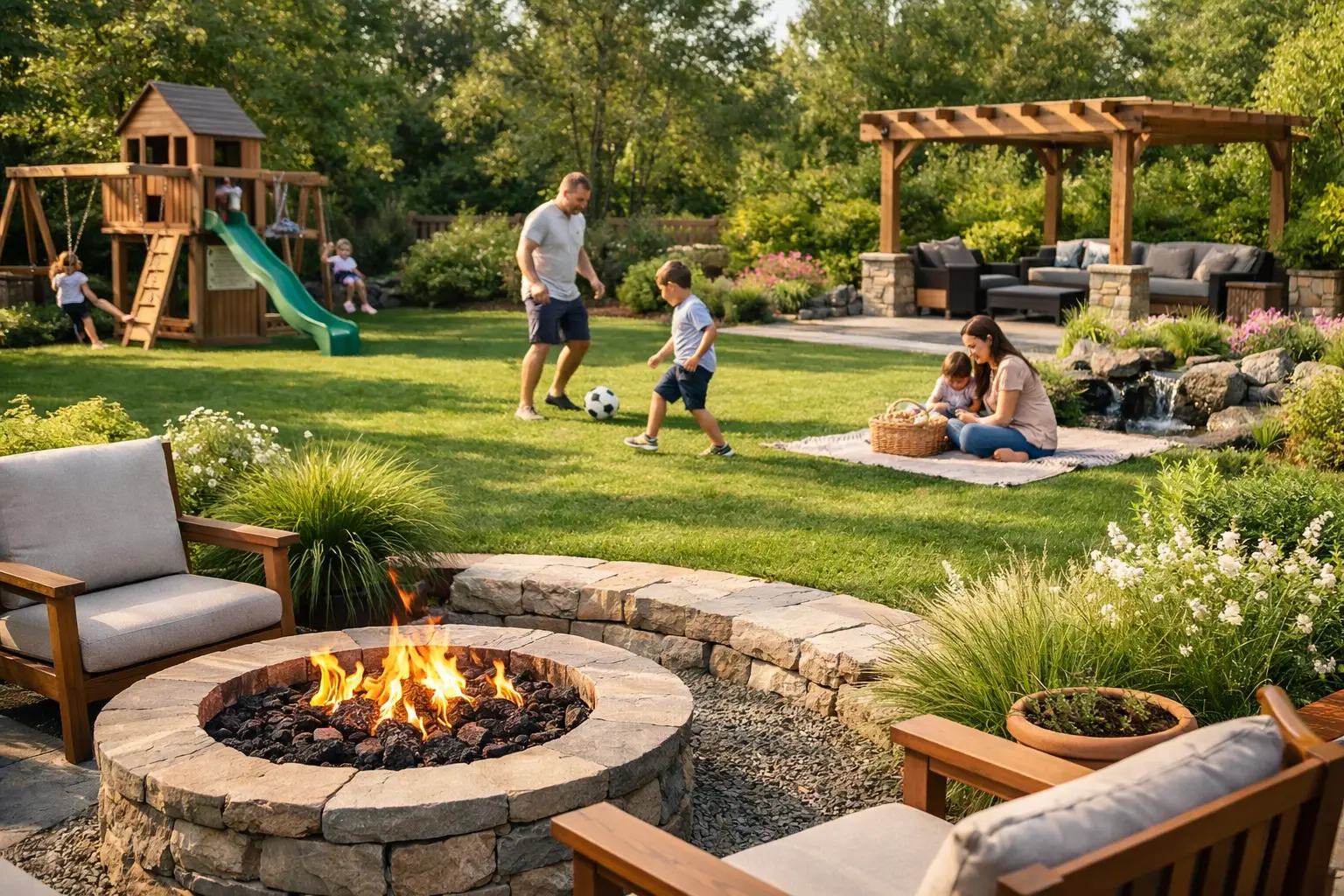
A family garden usually has to do more than one job at once. It needs to be safe for children, comfortable for adults, practical in wet weather, and still look like a considered part of the home rather than an afterthought. That is why landscaping for family garden spaces works best when it starts with how you actually live, not just how you want the finished garden to look in photographs.
For some households, the priority is a lawn with enough room for a kickabout. For others, it is a patio that can cope with summer meals, pushchairs, muddy shoes and the odd birthday gathering. Most family gardens need a bit of everything, and the challenge is fitting those uses together without the space feeling cluttered or hard to maintain.
What good landscaping for family garden use really means
The best family gardens are planned around movement, durability and balance. Children rarely stay in one spot, so the layout needs to allow clear routes between the house, lawn, seating areas and any storage. Adults, meanwhile, want a garden that feels tidy, usable and worth the investment.
That means good landscaping is not just about adding features. It is about deciding what deserves space, what can be simplified and what materials will still look good after years of everyday use. A stylish garden that becomes slippery in winter or turns into a maintenance burden by June is not a successful design.
A practical family garden also changes over time. A toddler-friendly space may need soft surfaces and enclosed play, while an older family may want more entertaining space and less lawn. Building in flexibility from the start often gives better long-term value than designing for one short stage of family life.
Start with zones, not features
One of the most useful ways to approach a family garden is to think in zones. Not formal, rigid sections, but clear areas with a purpose. This helps the garden feel organised and easier to use.
A dining or seating area usually works best close to the house, where access to the kitchen is easy and the view from indoors feels connected. A lawn or open play space often suits the middle of the garden, where it can act as a visual break and provide room to move. Storage, bins and utility space are usually better placed to the side or rear, where they remain accessible without becoming the first thing you see.
This kind of layout matters more than many homeowners expect. If everything is pushed into one area, the garden can quickly feel cramped. If each part of the space has a clear role, even a modest garden can feel larger and calmer.
Think about the route through the garden
Paths are often treated as secondary, but in family use they are essential. People will take the quickest route every time, especially children. If the natural route from the back door to the lawn cuts across planting beds or wet grass, that area will soon show wear.
Well-placed paths and paved links keep movement easy and reduce mess indoors. They also help in the colder months, when a garden that works in July may become awkward in November. This is especially relevant in the UK, where drainage and year-round usability can make or break the success of an outdoor space.
Choose surfaces that can handle family life
Materials matter in a family garden because they affect safety, maintenance and longevity. It is easy to be drawn to a finish that looks smart at first glance, but family use quickly exposes weak choices.
Patios should be slip-resistant and durable. Porcelain is popular for good reason, as it offers a clean finish and low maintenance, but the right specification matters. Natural stone can also work well, though some types need more care and weather differently over time. Timber decking may appeal visually, but it can become slippery and often demands more upkeep than homeowners expect.
For lawn areas, real grass gives a natural look and pleasant feel underfoot, but it does need attention. If your garden gets heavy use, poor drainage or a lot of shade, artificial grass may seem attractive. Even so, it is not always the perfect answer. It can get warm in direct sun, lacks the biodiversity benefits of natural planting and still needs cleaning to stay fresh. The right option depends on how the space will be used and how much maintenance you are realistically willing to take on.
Drainage should never be an afterthought
A family garden that holds water is frustrating and costly. Puddling on patios, soggy lawn edges and water sitting near the house can all point to poor planning below the surface.
Proper groundwork is what keeps a garden performing well. Falls, sub-bases, drainage channels and permeable areas may not be the exciting part of the project, but they are often what determine whether the finished result still works a year later. For homeowners investing properly in their outdoor space, this is one area where professional planning pays off.
Balance play space with grown-up living
Many families make the mistake of giving over the whole garden to children when they are young, only to find the space feels temporary and disconnected from the house. The opposite mistake is creating a polished entertaining garden with nowhere for children to actually be children.
A better approach is balance. That might mean keeping an open lawn rather than filling it with fixed play equipment, or using built-in bench seating that serves adults most of the time but leaves central space free. It could mean creating a corner for a play area that can later become raised beds, a fire pit zone or a garden office setting.
Permanent features should earn their place. If a trampoline dominates the garden, think carefully about where it sits and what it blocks. If you want outdoor dining, allow enough room for chairs to move comfortably without backing into planting or fencing. Family-friendly landscaping works best when every area has a purpose and none of them fight each other.
Planting should soften the space, not complicate it
Planting is what stops a practical family garden from feeling too hard or heavily built. It adds colour, texture and privacy, and it helps the garden feel established. The key is keeping it manageable.
Low-maintenance planting schemes often suit busy households best. That does not mean the garden has to be plain. It means choosing plants that can cope with local conditions, do not need constant pruning and are less likely to suffer if a football rolls through from time to time.
Raised beds and defined borders can help keep planting tidy and protected. Evergreen structure gives the garden shape through the year, while a smaller number of seasonal plants can add interest without creating endless upkeep. If young children use the space, it is also sensible to avoid anything sharply spiked, highly toxic or likely to drop large amounts of mess onto play and seating areas.
Storage is part of the design
A family garden rarely stays tidy by accident. Toys, bikes, cushions, garden tools and sports kit all need a home. Without planned storage, even a well-finished space can start to feel chaotic.
That is why sheds, built-in benches and discreet utility zones should be considered early, not added once the main work is done. Good storage keeps the garden easier to use and protects the look of the space. It also makes everyday routines simpler, which is usually what determines whether a garden gets used regularly or not.
For many homes, this practical side of landscaping is where real value sits. The finished garden may look smart, but if it also helps the household run more smoothly, the investment feels worthwhile every day.
Lighting and boundaries make the garden feel complete
Family gardens are often used beyond the middle of the day, especially in spring and summer. Lighting extends that use and improves safety. Subtle step lights, wall lighting near doors and gentle illumination around seating areas can make a big difference without turning the garden into a showpiece.
Boundaries matter too. Fencing, walls and gates need to provide privacy and security, but they also shape the appearance of the space. Well-finished boundaries make a garden feel complete and cared for. In some cases, especially for busier roads or overlooked plots, screening and clever planting can improve comfort more than expensive decorative features.
When to take a full project approach
If you are changing levels, replacing old paving, improving drainage, adding retaining walls or reworking the whole layout, it usually makes sense to treat the garden as a proper construction project rather than a series of smaller jobs. That allows the groundwork, drainage, materials and finish details to be coordinated properly from the outset.
For homeowners who want a reliable result with minimal disruption, a well-managed approach matters just as much outdoors as it does inside the home. A family garden is not simply a decorative extra. It is part of how the property functions, and when it is designed and built properly, it adds both daily enjoyment and long-term value.
The right garden does not need to be oversized or packed with features. It just needs to suit the way your household lives now, while leaving room for that to change. If you get the layout, materials and practical details right, the space will work harder, look better and feel easier to live with from the first day you use it.