
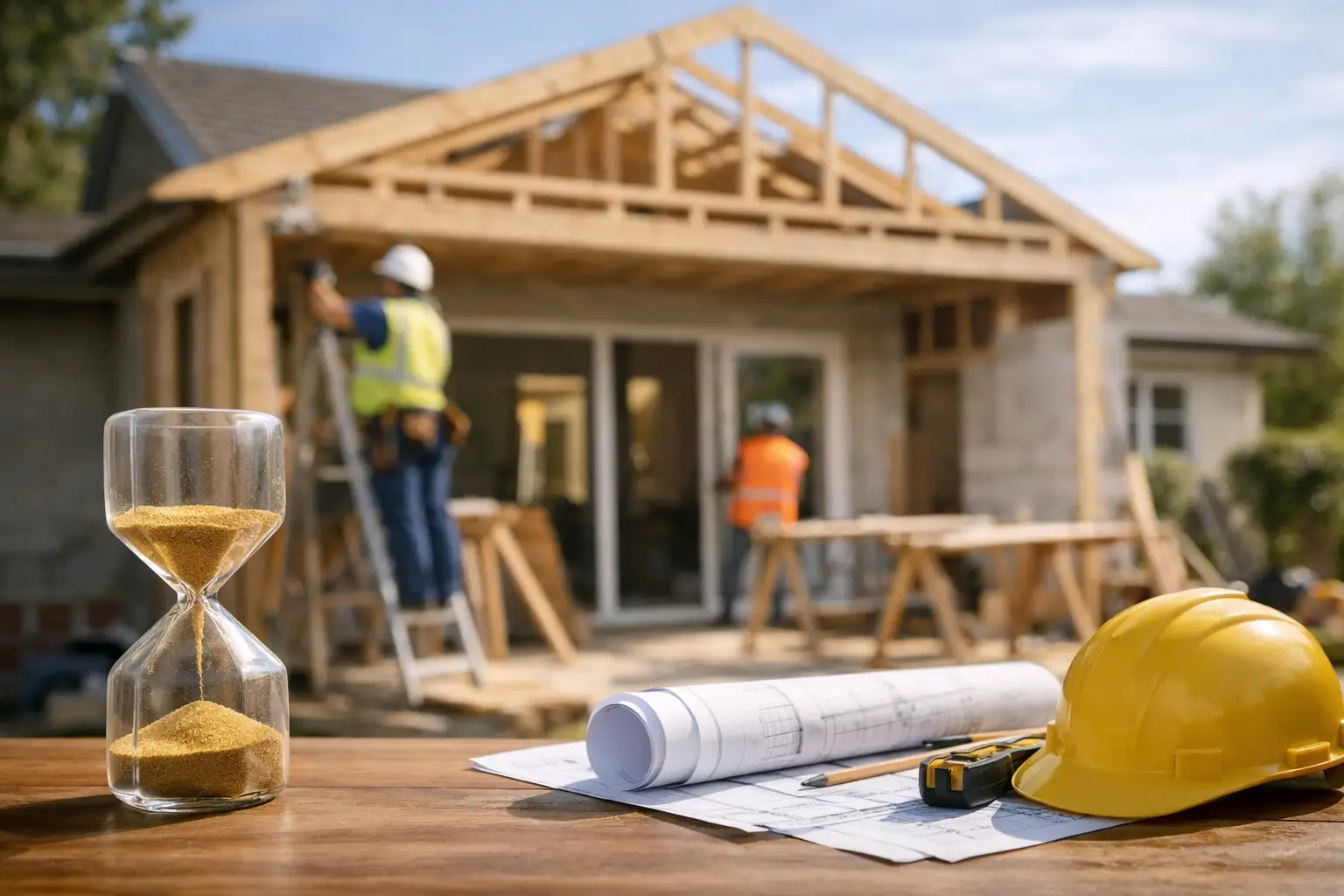
If you are planning extra space for a growing family, one of the first questions is usually how long does a home extension take. It is a fair question, and the honest answer is that the build itself is only one part of the timeline. Design, permissions, structural work, fit-out and final sign-off all affect how quickly you can move from idea to finished room.
For most homeowners, a straightforward extension project takes several months from first enquiry to completion. A simple single-storey rear extension may move faster than a large wraparound design or a two-storey build, but no reputable contractor should promise a one-size-fits-all programme before they understand the property, the scope and the level of finish you want.
How long does a home extension take in practice?
As a general guide, many home extensions take between 3 and 6 months on site once work begins. The full process, including design, planning and pre-construction preparation, often stretches to 6 to 12 months.
That range can feel wide, but there is a reason for it. A modest extension with clear access, straightforward ground conditions and no planning complications will move much more quickly than a project involving structural alterations, party wall matters, drainage changes or bespoke interiors. The more moving parts involved, the more careful the programme needs to be.
A good builder will explain this early. Clear expectations matter because a realistic timeline is far better than an optimistic one that slips halfway through the job.
The stages that shape your timeline
Initial consultation and survey
This early stage can take a couple of weeks, depending on how quickly surveys are arranged and decisions are made. It is where the practical groundwork starts. Measurements are taken, your goals are discussed and any obvious site constraints are identified.
At this point, homeowners often focus on layout and budget, but timing should be discussed just as seriously. If access is tight, if neighbouring properties are close, or if the existing house needs significant structural changes, these details can affect the programme before a spade goes into the ground.
Design and drawings
Design can take anywhere from 2 to 8 weeks, sometimes longer if the brief is evolving. A simple extension with a clear vision is normally quicker. A more detailed scheme with multiple revisions, structural changes and bespoke features naturally takes longer.
This is one of the stages where delays can quietly build up. Not because anyone is doing anything wrong, but because homeowners often refine ideas as they see the plans come together. That is completely normal. It just means the timeline needs to allow room for decisions.
Planning permission and approvals
If planning permission is required, this stage can add several weeks or more. Some projects fall under permitted development, while others need full planning approval. Building regulations approval will also be needed, whether through full plans or another accepted route.
This is why the answer to how long does a home extension take cannot be based on construction alone. Before site work starts, there may be a waiting period for approvals, party wall notices, structural calculations and technical drawings. None of that is visible on site, but all of it matters.
Pre-construction preparation
Once approvals are in place, there is still a lead-in period before work starts. Materials may need ordering, trades need scheduling and site logistics must be organised. If steelwork, bi-fold doors or made-to-measure glazing are part of the project, lead times can affect the start date or later stages of the build.
A well-managed contractor will not treat this as dead time. This is where good planning protects the programme.
Typical build times by extension type
A small single-storey extension may take around 10 to 14 weeks on site. This often includes foundations, structure, roofing, first fix, plastering, second fix and final finishes, assuming there are no major complications.
A larger single-storey extension, particularly one with open-plan structural alterations to the existing house, may take 12 to 16 weeks or more. Removing walls, installing steels and making good the original property adds work that homeowners do not always factor in at the start.
A two-storey extension often takes 16 to 24 weeks on site. There is more structure involved, more roofing detail, more external work and usually more internal disruption because upstairs rooms are affected too.
A wraparound extension can also sit at the longer end of the scale. Even if it is only single-storey, the complexity of the layout, drainage adjustments and structural integration with the existing house often make it a bigger job than it first appears.
What can slow an extension down?
Some delays are avoidable, and some are not. The important thing is recognising them early and planning properly.
Weather can affect groundworks, bricklaying and roofing, especially during wetter months. Ground conditions can also change the pace if unexpected issues appear once foundations begin. Poor drainage, hidden pipework or unstable ground may require design adjustments or additional work.
Client changes are another common factor. Changing window sizes, moving internal walls or upgrading finishes during the build is sometimes worthwhile, but it can affect ordering, sequencing and cost. Small changes do not always stay small once several trades are involved.
Material lead times still matter as well. Certain products arrive quickly, while others take weeks. If key items are chosen late, the programme can slow while everyone waits for them.
Then there is access. A detached property with good side access is usually easier to build than a terraced house where materials must come through the home or where storage is limited. Site conditions have a direct effect on productivity.
How to keep your extension on schedule
The best way to protect your timeline is to make good decisions before work starts. A clear brief, realistic budget and settled design reduce the chance of disruption later. The more that is agreed upfront, the smoother the build tends to be.
Choosing an experienced contractor matters just as much. Home extensions are not simply smaller versions of new builds. They involve working around existing structures, occupied homes and all the hidden surprises that older properties can contain. That requires planning, communication and careful sequencing.
It also helps to order key items early. Windows, doors, kitchens, tiles and specialist finishes should not be left until the last minute. If selections are delayed, trades can be left waiting, and that gap can quickly affect the programme.
Regular communication keeps everything moving. Homeowners should know what stage the project is at, what decisions are needed next and whether anything has changed. A well-run job is not just about people turning up on time. It is about keeping the whole process organised.
Should you live in the house during the work?
Sometimes yes, sometimes no. For a smaller extension with limited impact on the main living areas, staying in the property may be perfectly manageable. For larger projects, especially those involving major structural knock-throughs, temporary kitchen loss or extensive disruption, it may become difficult.
This does not always change the total build time, but it can affect how the work is phased. If a contractor needs to maintain certain services or keep parts of the house usable for longer, the sequence may be adjusted to reduce disruption. That is often worth doing, but it should be discussed from the start.
Why realistic timelines are better than fast promises
Homeowners are right to ask for efficiency, but speed on its own is not the goal. The aim is a well-built extension, finished properly, with good communication throughout. A rushed job can create more stress than a slightly longer one that is managed well.
There is a balance to strike. Nobody wants unnecessary delays, but most people would rather have a contractor who is honest about lead times, inspections and finishing details than one who overpromises just to win the work. Reliable project management is what turns a timetable into a result you are happy living with.
For homeowners in Essex planning an extension, the most useful answer is this: allow time for the whole process, not just the build. If your project is straightforward and well prepared, it may move quickly. If it is larger or more complex, a longer programme is normal and often sensible.
The right extension should give you more than extra square footage. It should feel like it always belonged to the house, and that is worth giving proper time to.