
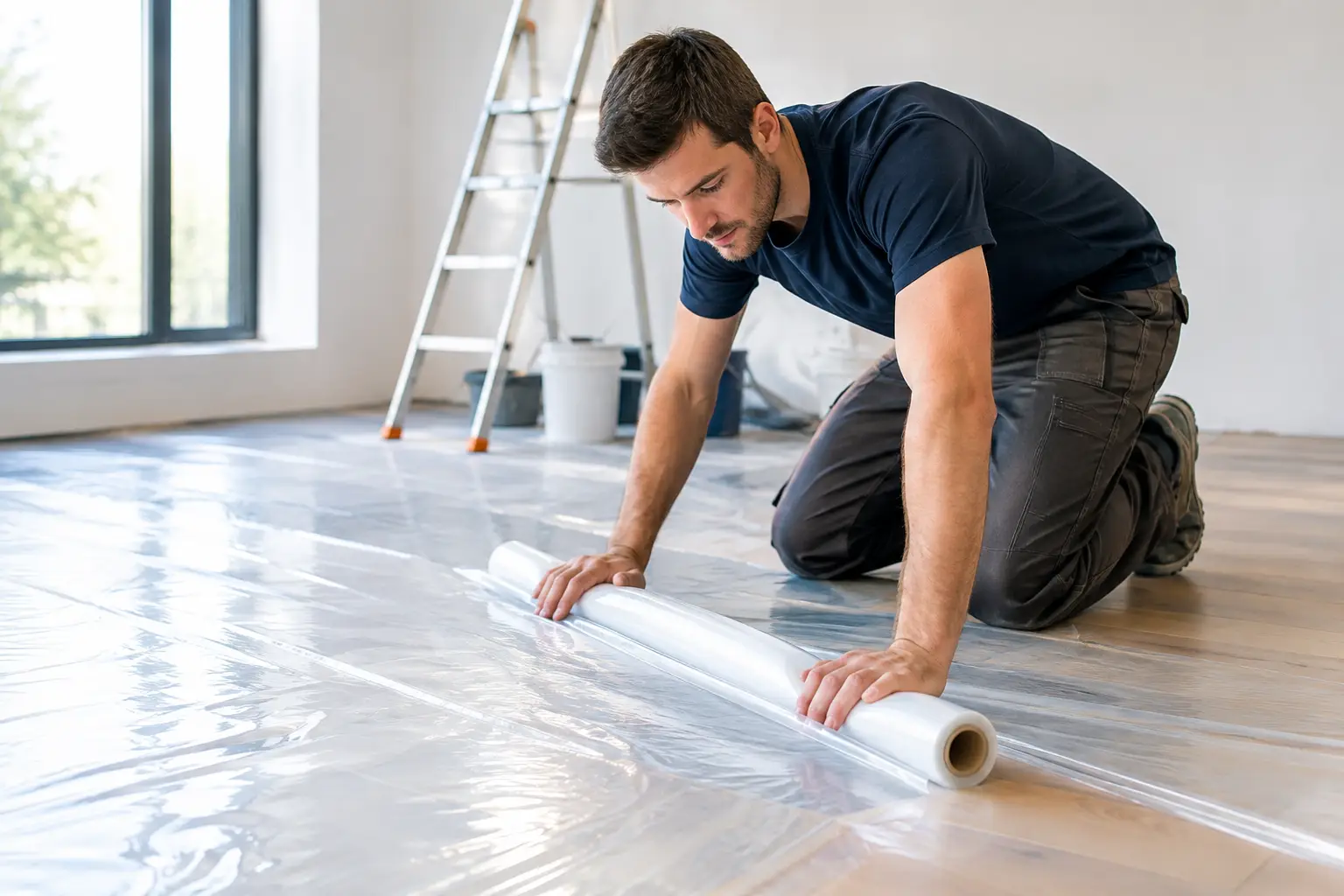
A newly fitted floor can be damaged surprisingly quickly. One dragged toolbox, a wet pair of work boots or plaster dust worked into timber grain can turn an exciting renovation into an avoidable repair. Knowing how to protect renovation floors means planning for the whole build, not simply laying a dust sheet on the first morning.
For homeowners, floor protection is about more than keeping things tidy. It helps preserve the finish you have paid for, reduces cleaning and repair work at handover, and keeps the route through your home safer for everyone on site. The right approach depends on the floor type, the scale of the works and whether the flooring is existing or newly installed.
Plan floor protection before work starts
The best time to decide how floors will be protected is during the pre-start planning stage. A clear site plan identifies which rooms will be active work areas, where materials will be stored, how trades will enter and leave the property, and which routes they will use each day.
This matters particularly on an extension, loft conversion or whole-house renovation, where different trades may move through the property over several weeks. Repeated foot traffic causes more damage than a single heavy delivery. By agreeing designated walkways and storage areas early, the team can avoid treating every room as a thoroughfare.
If possible, keep finished flooring until late in the programme. It is often sensible to complete messy work such as plastering, decorating, second-fix carpentry and heavy fitting before laying new carpets, engineered wood or luxury vinyl tile. There are exceptions: sometimes flooring must go down to suit fitted units, thresholds or a particular sequence of work. Where that is the case, protection needs to be upgraded rather than assumed.
Match the protection to the floor type
Not all protective materials work equally well on every surface. The aim is to create a barrier that absorbs impact and dirt without trapping moisture, leaving adhesive behind or marking a delicate finish.
Timber, engineered wood and laminate
Timber-based floors are vulnerable to scratches, dents and moisture. A breathable felt-backed or fleece-backed protection layer is often a good choice because it cushions the surface while allowing the floor to acclimatise. For routes carrying heavier equipment, rigid boards placed over the protective layer spread the load and reduce the risk of indentations.
Avoid putting adhesive tape directly onto a timber finish unless the flooring manufacturer confirms it is safe. Some tapes can lift lacquer, leave residue or pull at newly applied finishes. Moisture is equally important. Wet coverings, damp boots and spills should be dealt with promptly, particularly around entrances and kitchen works.
Laminate needs similar protection, but its joints deserve extra attention. Water that sits along an edge can find its way beneath the boards and cause swelling. Protective materials should be dry, clean and checked regularly.
Vinyl, LVT and linoleum
Vinyl flooring can mark under concentrated weight, especially when appliances, ladders or scaffold boards are left in one spot. Use clean, non-staining coverings and spread the load beneath heavy items with boards. Rubber-backed mats may discolour certain vinyl finishes, so they should not be used unless approved by the manufacturer.
Newly laid LVT also needs time to cure. Covering it too soon can interfere with adhesive performance or create uneven marks. Your contractor should follow the product guidance and allow the appropriate curing period before introducing protection or foot traffic.
Tiles and natural stone
Tiles may look hard-wearing, but edges and corners can chip when tools are dropped or heavy materials are wheeled across them. Grout can also stain if it is not fully cured. A soft protective layer followed by rigid board over busy routes gives much better protection than cardboard alone.
Natural stone needs extra care because it can be porous and susceptible to staining. Do not assume that a sheet of plastic is enough. If moisture is trapped beneath non-breathable sheeting, it may affect the finish or encourage discolouration. The chosen protection should suit the specific stone, sealant and curing stage.
Carpet
Carpet protection film can be useful for clean, dry routes, but it is not appropriate for every carpet and should not be left down indefinitely. Adhesive-backed film may cause problems on some wool, loop-pile or recently fitted carpets. For heavier works, breathable temporary coverings with taped joins are often more dependable.
The main rule is simple: keep muddy and wet traffic away from carpet wherever possible. A protected hard-floor route from the entrance to the work area is far easier to manage than trying to protect every stair tread and landing after the fact.
Create protected routes, not just covered rooms
Floor protection works best when it follows the way a project actually operates. Covering an entire room may be unnecessary if the work is limited to one area, while leaving the hallway unprotected can cause damage within hours.
A well-managed site usually has a defined route from the entrance to the work zone, with a practical place for boots, tools and deliveries. Corners, stairs, thresholds and doorways need particular attention because they receive repeated impact and are easy to scuff. Stair treads should be covered securely without creating a trip hazard, and loose edges should be repaired as soon as they appear.
It is also worth protecting the route from outside. Door mats and temporary entrance coverings capture grit before it reaches finished surfaces. In wet weather, the team may need to refresh these more often or adjust working practices. Good protection is not static. It responds to the conditions on site.
Control dust, moisture and heavy loads
Scratches are obvious, but dust and moisture can be just as costly. Fine plaster and construction dust are abrasive. When walked across wood, vinyl or tiles, they can dull a surface like sandpaper. Regular vacuuming with the correct attachment is safer than sweeping dust around with a stiff brush.
Where cutting or sanding is required, containing the work area and using suitable extraction makes a noticeable difference. Doors can be screened off, and clean routes should be separated from dusty zones wherever practical. This protects floors, but it also makes the home more comfortable for families living through a renovation.
Heavy loads need a separate plan. Kitchen units, appliances, plasterboard stacks and machinery should not be dragged over any finished floor. Use lifting equipment where appropriate, or lay a protected board route that spreads the weight. Before a large delivery arrives, check access points, turning spaces and the intended storage location. A few minutes of planning can prevent a cracked tile or a deep dent that is difficult to disguise.
Check protection throughout the project
Even high-quality coverings cannot be installed once and forgotten. Tape can lift, boards can shift and dust can accumulate underneath. Protection should be inspected routinely, particularly after deliveries, wet weather or a change of trade.
If a covering becomes wet, torn or heavily soiled, replace it rather than laying another layer over the top. Dirt trapped beneath protection can still scratch a floor as people walk across it. The same applies to screws, offcuts and sharp debris, which should be cleared before anyone moves sheets or boards.
Communication is part of this process. Every trade on site should understand which areas are finished, where they can walk and where materials can be placed. Clear expectations prevent the frustrating situation where one careful team protects a floor and another inadvertently damages it later in the programme.
Remove coverings carefully at handover
The final stage is as important as the first. Protection should be removed slowly and methodically, ideally as the last works are completed. Pulling tape sharply from a painted skirting board or recently finished threshold can cause damage at the point when the home should be looking its best.
Once coverings are lifted, the floors should be inspected in good light. Any marks can then be identified, cleaned or addressed before the project is signed off. This is also the right time for a proper builders’ clean, using products suitable for the surface rather than harsh chemicals that may damage a new finish.
At Build 247 Construction Ltd, careful protection forms part of a well-organised project, alongside clear communication and respect for the home being improved. A renovation will always involve some disruption, but avoidable damage should never be accepted as part of the process.
A well-protected floor lets the final reveal feel exactly as it should: clean, finished and ready for everyday family life.