
A garden should be usable after a shower, not left with puddles across the lawn, muddy paths and water sitting against the house. The best garden drainage solutions deal with the cause of the problem rather than simply moving water from one inconvenient place to another. For homeowners planning landscaping, an extension or a garden room, getting drainage right early protects both the finished space and the property.
Why garden drainage needs a proper plan
Poor drainage is often more than an untidy lawn. Repeated standing water can damage turf, wash soil from borders, make patios slippery and leave timber features exposed to unnecessary moisture. More seriously, water that continually collects near external walls may contribute to damp issues or place pressure on the drainage around the building.
In Essex and surrounding areas, clay-heavy ground can make this more challenging. Clay holds water and drains slowly, particularly after sustained rain. A solution that works well in free-draining sandy soil may not be enough for a compacted or clay-based garden.
The right approach depends on where the water comes from, where it settles and whether there is a suitable place for it to discharge. A well-planned system considers levels, ground conditions, existing drainage and the layout you want to achieve, rather than relying on a quick surface-level fix.
Start by identifying the source of the water
Before choosing a drain, watch what happens during and after rainfall. Does water run down towards the house from a neighbouring level? Is it collecting at the bottom of a sloping lawn? Does it overflow from gutters or sit beside a patio because the paving falls the wrong way?
Also check whether the issue is localised or affects the whole garden. A single wet patch may be caused by compacted soil, a leaking pipe or a low area in the lawn. Widespread boggy ground could point to poor natural drainage, inadequate falls or water being directed into the garden from roofs and hard surfaces.
This assessment matters because adding a drain without correcting poor levels can leave the original issue untouched. Equally, altering levels carelessly can direct water towards a neighbour’s property or back towards the home. Drainage should always lead water safely away from buildings and into an appropriate outlet.
The best garden drainage solutions explained
Regrading and correcting garden levels
Regrading means reshaping the ground so surface water naturally moves away from the house and away from areas that need to remain dry. This can be one of the most effective solutions when a garden slopes towards the property or a patio has been laid without a suitable fall.
It is particularly valuable during a wider landscaping project, as levels can be designed correctly before new turf, paving, retaining walls or planting are installed. The trade-off is that substantial regrading may involve removing and importing soil, adjusting steps or rebuilding parts of a patio. It needs careful planning, but it creates a reliable foundation for everything that follows.
French drains for persistent wet ground
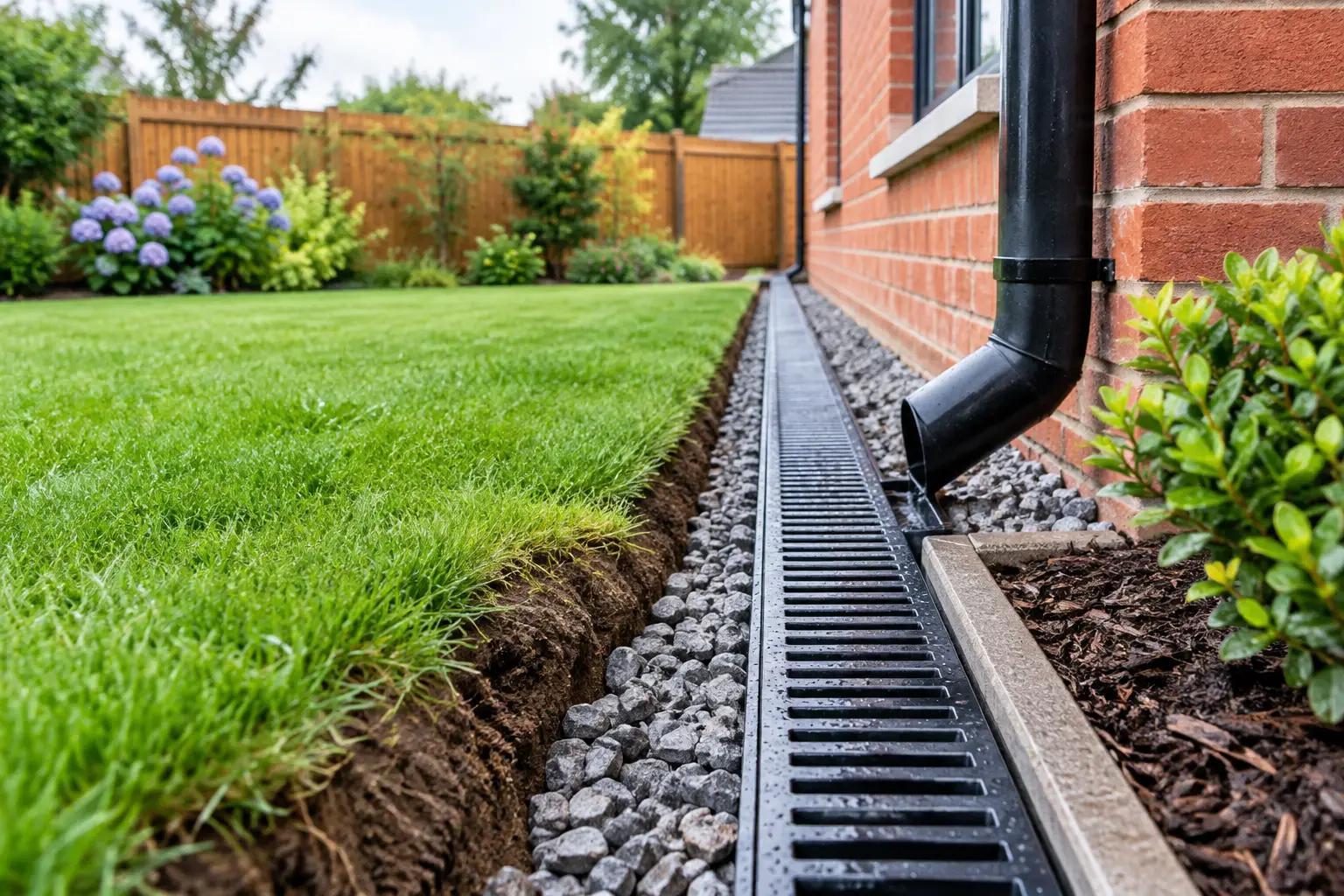
A French drain is a gravel-filled trench containing a perforated pipe. Water enters through the gravel, flows into the pipe and is carried towards a suitable discharge point, such as a soakaway or approved drainage connection.
This is often a practical answer for soggy lawn edges, water collecting beside patios or runoff from a slope. It is not a cure-all. A French drain needs a consistent fall and somewhere for the water to go. If the pipe simply ends in already saturated ground, it may fill up without resolving the problem.
The finish can be discreet, with gravel visible at the surface or soil and turf reinstated above it where appropriate. Correct installation is crucial, including suitable geotextile lining to help prevent soil clogging the gravel over time.
Channel drains around patios and doors
Channel drains are narrow linear drains fitted into paving, usually alongside patio doors, thresholds, garages or the edge of a hard landscaped area. They collect surface water before it reaches the building and direct it into a connected drainage system.
They are especially useful where a new patio meets the house or where low thresholds leave little room for error. A channel drain should work alongside properly laid paving, not compensate for poor installation. The patio still needs to fall away from the property so water reaches the drain rather than pooling against walls.
Soakaways for controlled water dispersal
A soakaway is an underground structure that allows water to disperse slowly into surrounding ground. It can receive water from roof downpipes, channel drains or land drains, reducing the amount of runoff sitting on the surface.
Whether a soakaway is suitable depends heavily on soil conditions and groundwater levels. Ground that is already waterlogged or slow-draining may not absorb water quickly enough. A percolation test can help establish whether the ground is capable of handling the volume of water expected.
Soakaways also need to be positioned appropriately away from buildings and boundaries. This is not an area for guesswork, particularly when drainage forms part of an extension, garden room or major external renovation.
Permeable paving and gravel surfaces
Replacing impermeable surfaces with permeable paving, resin-bound systems designed for drainage, or correctly built gravel areas can reduce runoff at source. Instead of sending all rainwater across the garden, the surface allows it to filter down through a suitable sub-base.
This can be an excellent option for paths, patios and driveways, especially where large hard surfaces are contributing to standing water. However, the sub-base and edge restraints matter as much as the finish. Simply laying gravel over compacted soil will not create effective drainage and can quickly become uneven or muddy.
Land drains for larger gardens
Land drains are perforated pipes installed below ground to intercept water across a wider area. They are commonly used where lawns remain saturated, gardens sit at the bottom of a slope or water regularly enters from adjoining land.
They can be very effective, but they need a considered layout and proper outfall. Larger systems may also require coordination with retaining structures, paving levels and rainwater drainage. For a substantial garden transformation, installing land drainage before landscaping is often far less disruptive and more cost-effective than retrofitting it later.
Matching the solution to your garden
There is rarely one best answer for every property. A low patio next to bifold doors may need corrected falls and a channel drain. A waterlogged lawn may benefit from regrading combined with French drains or land drains. A new driveway might be better served by permeable construction and controlled runoff rather than additional pipework.
In many cases, the strongest result comes from combining measures. For example, reshaping the garden can move surface water towards a planted border, while a French drain intercepts excess water before it reaches the patio. Downpipes can then be directed to a soakaway where ground conditions allow.
The priority is to avoid treating drainage as an afterthought. Once paving, turf and planting are complete, correcting poor falls or installing underground pipework can mean unnecessary cost and disruption.
Drainage during extensions and garden projects
A home extension, garden room or external renovation changes how rainwater behaves around the property. New roofs increase runoff. New patios and paths reduce the amount of open ground available for water to soak into. Even a small change in level can affect where water collects.
This is why drainage should be considered as part of the wider build programme. Existing gutters, downpipes, inspection chambers and surface levels should be reviewed before work begins. The proposed finish should include clear falls, suitable drainage points and practical access for future maintenance.
Build 247 Construction Ltd approaches external works with the same attention to planning and finish as internal home improvements. Coordinating drainage alongside landscaping or structural work helps ensure the completed space looks right, performs properly and remains straightforward to maintain.
When to bring in a professional
Simple maintenance, such as clearing blocked gullies and gutters, may resolve a minor issue. Persistent standing water, water near the house, changes to garden levels or drainage connected to a building project deserve professional assessment.
A dependable contractor will explain what is causing the issue, set out the realistic options and be clear about any limitations created by ground conditions or existing drainage. They should also plan the work carefully to minimise disruption to the areas of the garden that do not need to be disturbed.
A dry, well-drained garden is not only easier to enjoy. It gives patios, lawns, planting and new outdoor improvements the conditions they need to last. Address the water first, and every part of the garden has a better chance of performing as intended.