
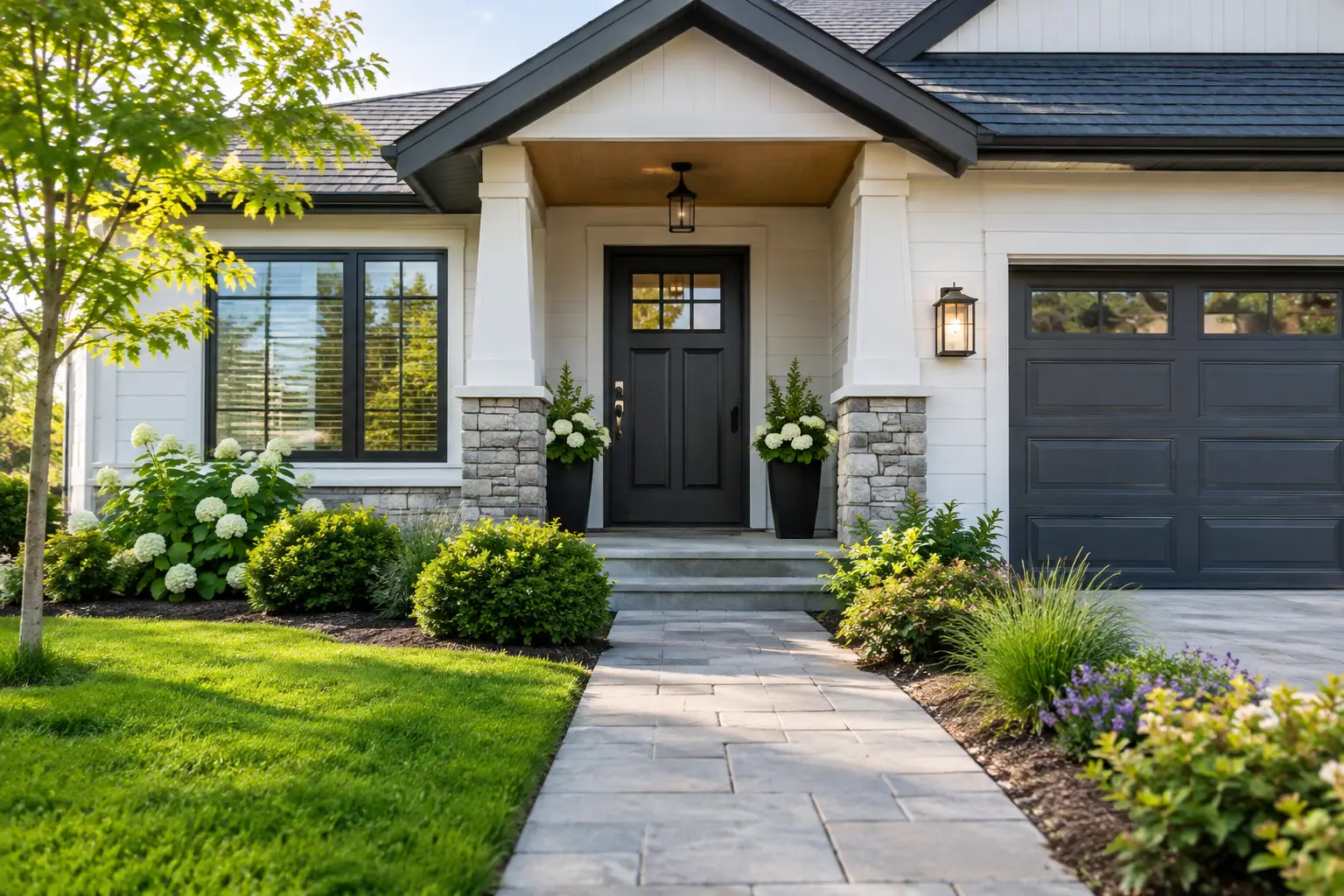
A tired gate, cracked driveway or neglected front garden can make an otherwise well-kept property feel overlooked. The best ways to improve kerb appeal are rarely about one expensive feature. They are about creating a clean, welcoming approach that shows the home has been cared for from the boundary to the front door.
For homeowners planning to sell, kerb appeal helps create a strong first impression before a viewing begins. For those staying put, it simply makes arriving home more enjoyable and can support the value of wider improvements, from an extension to a full renovation.
Ways to improve kerb appeal that make a real difference
Start by standing across the road and looking at your property as a visitor would. Notice what draws the eye first, whether that is an attractive entrance, overflowing bins, peeling paint or an overgrown hedge. This wider view helps you spend where it will have the greatest effect rather than making small changes that get lost in the overall picture.
1. Repair the basics before adding new features
Nothing undermines a smart new front door quite like loose paving, damaged brickwork or gutters stained with years of overflow. Begin with practical repairs: repointing where mortar has failed, replacing broken roof tiles, securing gates and correcting drainage issues that leave paths green or slippery.
This work may not feel as exciting as choosing plants or exterior lighting, but it sets the standard for everything else. It also prevents a cosmetic refresh from hiding problems that will need attention later. A well-maintained exterior signals quality and makes subsequent improvements look intentional.
2. Give the front door proper attention
The front door is usually the natural focal point of the house. If the existing door is sound, careful preparation and a quality exterior paint can transform it. Deep blue, heritage green, charcoal and rich black tend to work well with many brick and render finishes, but the right choice depends on the property’s character and the surrounding homes.
Where a door is draughty, warped or dated beyond repair, replacement can be the better long-term decision. Consider the frame, letterbox, handle, house number and door furniture as one scheme. Mixing tired brass fittings with a newly painted door can dilute the result, while coordinated details create a more polished entrance.
3. Refresh windows, fascias and external joinery
Flaking paint around timber windows, faded fascias and worn soffits are easy to overlook because they sit above eye level. Yet these details strongly affect how clean and cared-for a property appears. Repainting sound timber, replacing damaged boards and cleaning window frames can brighten the entire frontage.
For period properties, retain appropriate proportions and features where possible. Modern replacements can improve energy efficiency and reduce maintenance, but a poorly chosen style may look out of place. The aim is not to make every home look new – it is to make it look well maintained and suited to its setting.
4. Improve the driveway and paths
The route from pavement to door should be safe, clear and visually tidy. Pressure washing can revive block paving and patios, although it should be followed by re-sanding where required. Cracked concrete, uneven slabs and poorly repaired tarmac are usually better addressed properly than repeatedly patched.
A new driveway can make a significant visual improvement, particularly where parking areas have become uneven or too small for modern family life. Materials matter: resin-bound surfaces offer a clean, contemporary finish, while block paving can suit more traditional homes. Whichever option you choose, make sure drainage is considered from the outset. Standing water damages surfaces and quickly spoils the appearance of an entrance.
5. Create a front garden that is manageable
A neat front garden does not have to mean a high-maintenance garden. Well-defined beds, healthy lawn edges, trimmed hedges and planting that looks good across several seasons will often have more impact than a crowded display that becomes difficult to manage.
Choose plants with the aspect in mind. A shaded entrance needs different planting from a sunny, exposed frontage. Evergreen structure can keep the space looking settled through winter, while flowering perennials and bulbs introduce colour at the right times of year. If upkeep is a concern, use fewer varieties in larger groups and leave enough access for pruning and weeding.
6. Set clear boundaries without closing the property in
Fences, walls, gates and hedges frame the home. When they lean, rust, sag or clash with the property, the whole frontage can feel untidy. Repairing or replacing a boundary feature can therefore be one of the most effective ways to improve kerb appeal, especially on a corner plot or a home facing a busy road.
The balance is important. Tall solid fencing may improve privacy but can make a small front garden feel enclosed. Lower brick walls, metal railings, open fencing and layered planting can define the boundary while keeping the approach light and welcoming. If security is a key priority, a well-designed gate and appropriate lighting may be more effective than simply adding height.
7. Use exterior lighting with restraint
Good lighting is practical, reassuring and attractive. It makes pathways safer, highlights house numbers and helps visitors find the entrance on darker evenings. Wall lights beside the door, discreet path lighting or carefully placed downlights can all work well when they are proportionate to the property.
Avoid over-lighting the frontage. Bright fittings pointed towards the street can feel harsh, disturb neighbours and reveal every imperfection in the paving. Warm, low-glare lighting is generally more inviting. Choose durable fittings designed for external use and position cables and controls neatly as part of the installation.
8. Make the house number easy to find
This is a small detail with a practical purpose. Delivery drivers, guests and emergency services should be able to identify the property quickly, particularly after dark. A clear, well-positioned house number also helps the entrance look considered.
Pick a style that suits the building rather than following a passing trend. Traditional ceramic plaques can suit older homes, while brushed metal or simple black numerals work well on contemporary facades. Ensure the number contrasts sufficiently with the background and is not hidden behind planting.
9. Consider the condition of the exterior finish
Render, cladding and brickwork occupy a large part of the visual field, so their condition matters. Cleaning can remove algae and staining, but it should be carried out carefully to avoid damaging the surface. Cracked render, spalled bricks or persistent damp marks need investigation rather than a quick coat of paint.
If an external renovation is planned, think about how the finish will work with the roof, windows, driveway and boundary treatments. A modern rendered facade can look excellent when the details are coordinated, but may feel disconnected if older features are left in poor condition. Consistency is what gives a property a finished appearance.
10. Keep the everyday clutter under control
Bins, recycling boxes, hoses, children’s toys and wheelie bins are part of normal family life, but they do not need to dominate the frontage. A screened storage area, compact bin store or a simple designated space behind a gate can make an immediate difference.
This is also the final check before photographs, viewings or welcoming guests. Sweep the path, remove weeds from driveway edges, clean the door glass and make sure any seasonal decorations are tidy rather than overwhelming. These are modest jobs, but they help the larger improvements look their best.
Plan kerb appeal alongside bigger home improvements
The best results often come when exterior work is considered as part of a larger project. An extension, loft conversion or internal renovation can change how people use the home, while landscaping, paving and external finishes help the property look complete from the outside. Planning these elements together can avoid duplicated work, mismatched materials and unnecessary disruption.
At Build 247 Construction Ltd, careful coordination and finish quality are central to every home improvement project. Whether the priority is a renewed driveway, a smarter entrance or a wider external renovation, a clear scope and well-managed programme give you greater confidence in the result.
Start with the repairs that protect the home, then invest in the features people notice most as they approach it. A welcoming exterior is built through good decisions, sound workmanship and the small details that make a house feel properly looked after.