
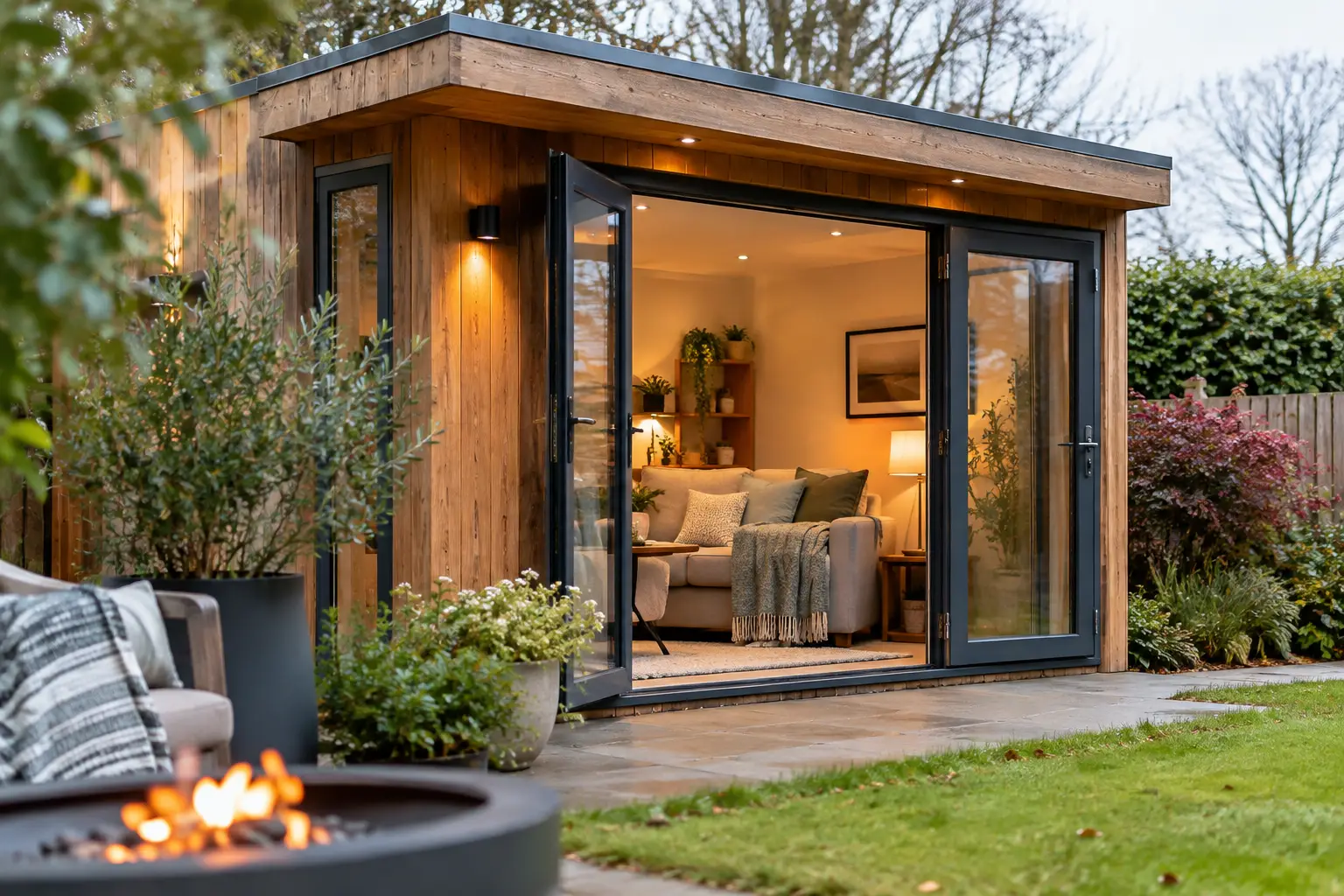
A garden room can feel perfect when you first step inside on a mild spring day. The real test comes in January, when the ground is cold, daylight fades early and you want to use the space for a full working day or a family evening. So, do garden rooms need heating? Not always, but most garden rooms intended for regular, year-round use will benefit from a properly planned heating solution.
The right answer depends on how you will use the room, how well it is insulated, its size and the level of comfort you expect. Heating should never be treated as an afterthought. It works best when considered alongside the building fabric, glazing, ventilation and electrical design from the beginning.
Do garden rooms need heating for year-round use?
If your garden room is a summer retreat, occasional hobby space or storage area, heating may not be essential. Good insulation and a well-positioned building can keep it comfortable for much of the year without adding a permanent system.
However, a room used as a home office, gym, studio, treatment room or extra living area is different. Sitting still at a desk on a cold morning requires a reliably warm environment. A compact electric heater may take the edge off, but it is unlikely to provide the consistent comfort and efficient running costs most homeowners want over a full winter.
For year-round use, heating is usually a sensible part of the specification. It helps make the room genuinely usable rather than a space that is enjoyed only in favourable weather. It can also protect finishes, equipment and furnishings from prolonged cold and damp conditions.
Insulation matters before heating
The most efficient heating system cannot compensate for a poorly built garden room. Heat will simply escape through the floor, walls, roof and glazing, leaving the room slow to warm up and expensive to run.
A quality garden room should be designed as a complete insulated structure. This includes a well-insulated floor, walls and roof, as well as properly fitted double or triple glazing where appropriate. Airtightness matters too, although the room must still have suitable ventilation to manage moisture and maintain healthy air quality.
This is where build quality makes a practical difference. Careful detailing around doors, windows and junctions reduces draughts and cold spots. It also means the heating system can be sized sensibly, rather than being oversized to make up for heat loss.
Large areas of glass can make a garden room bright and attractive, but they need consideration. South-facing glazing may provide welcome warmth on sunny days, yet it can also lead to overheating in summer. Blinds, ventilation and appropriate glass specification help keep the temperature balanced across the seasons.
Heating options for a garden room
There is no single best option for every project. The right system depends on the room’s use, available services, budget and preferred finish.
Electric radiators
Electric radiators are a popular choice for garden rooms because they are straightforward to install and offer responsive, controllable warmth. Modern models can be programmed around working hours, allowing you to heat the room when needed rather than all day.
They suit smaller offices, studios and occasional-use spaces particularly well. The trade-off is running cost. Electricity can be more expensive than gas per unit of heat, so insulation and sensible controls are especially important.
Electric underfloor heating
Underfloor heating provides an uncluttered finish and an even, gentle warmth underfoot. It is often a good fit for a garden room used as a gym, yoga space or garden lounge, especially where tiled or engineered flooring is planned.
It is usually slower to respond than a radiator, so it works best with a timer and a predictable routine. It can also be more costly to run as a primary heat source in a larger room. For some homeowners, combining it with a radiator gives greater flexibility on colder days.
Air conditioning with heating
A split air conditioning unit that also provides heating can be an effective all-season option. It can warm the room in winter and cool it during hot weather, which is valuable in a heavily glazed office or south-facing garden room.
These systems are efficient when correctly specified, but they require professional installation and careful consideration of the outdoor unit position. Noise, appearance and access for servicing should all be discussed before work begins.
Extending central heating
Connecting a garden room to the home’s existing central heating can offer familiar, consistent warmth. It may be suitable where the garden room is close to the house and the existing boiler has sufficient capacity.
That said, extending pipework underground and through the garden can add complexity and cost. It is not always the most practical route, particularly for a detached room at the far end of the garden. A heating engineer should assess the system rather than assuming it can support additional radiators.
Choosing the right size system
It is tempting to select heating based only on the floor area, but that can lead to disappointing results. Ceiling height, glazing, orientation, insulation levels and how often doors are opened all affect heat demand.
A garden room used by one person as an office may need a different approach from the same-sized room used for family gatherings. A room with bi-fold doors and broad rooflights will also behave differently from one with limited glazing.
A professional installer can calculate the likely heat loss and recommend a suitable output. This avoids paying for more capacity than you need while ensuring the room remains comfortable during cold spells. It also helps you plan the electrical supply correctly, which is particularly relevant where electric heating, lighting, sockets and air conditioning are all required.
Controls make comfort more affordable
A well-insulated room with basic heating can outperform a poorly controlled system with a higher output. Programmable thermostats, zoned controls and app-based timers allow the garden room to follow your routine.
For example, a home office may only need to be warm from 8am to 6pm on weekdays. A gym may be used early in the morning and again in the evening. Heating the room continuously between those times wastes energy, especially when nobody is there.
Keeping the temperature moderate rather than excessively high also helps. A stable, comfortable setting is generally more economical than repeatedly allowing the room to become very cold and then heating it rapidly.
Planning heating into the build
Heating decisions affect more than the final appliance. Underfloor systems influence floor build-up; radiators require wall space; air conditioning needs internal and external unit locations; and every option requires appropriate electrical planning.
For a new garden room, this coordination is simplest when it happens before construction starts. The electrical layout can be planned around furniture, desk positions and intended use, while insulation, ventilation and finishes are specified as one considered package.
At Build 247 Construction Ltd, this joined-up approach is central to creating garden rooms that feel like a genuine extension of the home, not a separate building that is only comfortable for part of the year. Clear planning at the outset also reduces the risk of disruptive alterations after the room is finished.
A practical decision for your garden room
Heating is not compulsory for every garden room, but it is often what turns a pleasant extra space into one you depend on throughout the year. Start with a well-insulated, carefully built structure, then choose a heating system that suits how you actually live.
If you are planning a garden room in Essex, think beyond the first warm day you picture using it. Consider the darkest winter morning too – and build a space you will still be pleased to step into.