
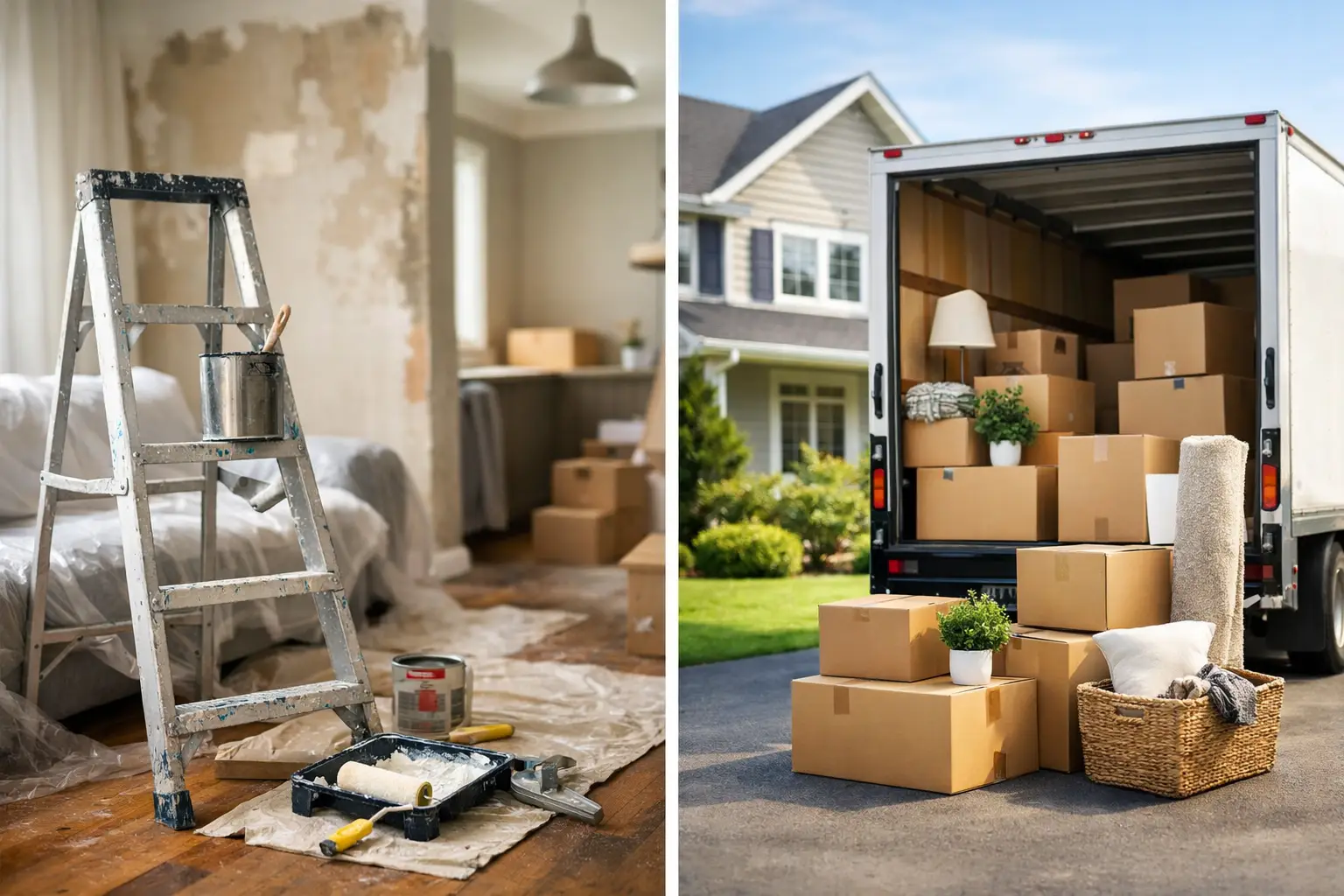
A home can feel too small long before it is truly unsuitable. The spare room becomes an office, children need more privacy, storage spills into every corner, and an outdated layout starts to make daily life harder than it should be. When that happens, the renovation vs moving house decision is not simply about square footage. It is about what you need from the next stage of family life, what your budget can support, and whether your current property still has the potential to work for you.
For many homeowners, moving is the first answer that comes to mind. Yet a well-planned extension, loft conversion or full renovation can create the space and usability you want while allowing you to remain in a location you already value. The right choice depends on the numbers, certainly, but also on planning potential, timing and the practical realities of both routes.
Renovation vs Moving House: Start With What Is Not Working
Before comparing prices, be specific about the problem. Is your house short of bedrooms, lacking a proper kitchen-dining space, or simply poorly arranged? A growing family may need a loft conversion with an additional bedroom and bathroom. Someone working from home may benefit more from a garden room than a larger house. An older property might have enough space already but need internal reconfiguration, better insulation and modern finishes to become more comfortable.
Moving can solve a genuine location problem. If the school run, commute, parking, local amenities or neighbourhood no longer suit your circumstances, renovating will not change those factors. Equally, if the property has limited scope to extend or its layout cannot be improved sensibly, buying elsewhere may be the more realistic long-term decision.
However, homeowners sometimes assume they need a larger property when they actually need a better one. Opening up disconnected rooms, extending at the rear, converting unused roof space or improving the flow between the house and garden can make a familiar home feel considerably more generous.
Compare the Full Cost, Not Just the Sale Price
The financial comparison needs to be honest. Moving house involves far more than the difference between the value of your current home and the price of a new one. There may be estate agent fees, solicitor fees, survey costs, mortgage arrangement charges, removals and Stamp Duty Land Tax. Once you have moved, there is often decorating, furnishing and repair work that was not obvious during viewings.
A renovation has its own costs and should never be treated as a cheap shortcut. Structural work, planning requirements, building regulations, finishes and temporary living arrangements all need to be allowed for. The advantage is that the scope can be tailored to your needs and budget. You may decide to complete the main extension first, then upgrade the kitchen or landscaping at a later stage.
The key is to compare like with like. If a move would cost £80,000 more after fees and taxes, ask what that investment could achieve in your existing home. Could it fund a loft conversion and rear extension? Could it create a larger kitchen, utility room, additional bedroom and more efficient heating? The answer will vary by property, but putting the options side by side often makes the decision clearer.
Consider value, but do not chase it blindly
Quality improvements can add value, especially where they create useful living space or address the features buyers expect in your area. A carefully designed extension, an additional bedroom or a modernised kitchen can strengthen the appeal of a property. In parts of Essex where larger family homes are in demand, this can be particularly relevant.
That said, the best project is not always the one with the highest theoretical return. Avoid improving far beyond the ceiling value of comparable homes nearby, and do not sacrifice practical design in pursuit of a figure on paper. A home that works better for your family over the next five to ten years has value in its own right.
Assess What Your Property Can Become
A professional assessment can reveal opportunities that are easy to overlook. Loft height, side access, garden depth, drainage, existing foundations and neighbouring properties all influence what is feasible. Planning rules also matter, although some work may fall within permitted development rights.
A rear extension may be ideal for creating the open-plan kitchen and dining space your home lacks. A side return can turn a narrow, dark kitchen into a room with room to cook, eat and spend time together. Loft conversions often provide an efficient way to add a bedroom without reducing garden space. For properties with sufficient outside room, a garden room can offer a calm office, gym or flexible family space without changing the main house.
The best option is rarely chosen from a floor plan alone. Good design considers daylight, storage, circulation, privacy and how the new area will connect to the rest of the property. A larger room that interrupts the flow of the house will not feel like a successful improvement. This is where early conversations with an experienced contractor can prevent expensive changes later.
Be Realistic About Disruption and Timescales
Moving is stressful, but it is often seen as a short, defined period of disruption. In reality, finding the right property, making offers, managing a chain and waiting for completion can take months. A purchase can still fall through late in the process, leaving families in limbo.
Renovation brings disruption closer to home. There will be noise, deliveries, trades on site and periods when parts of the house are less convenient to use. Major structural work may require a temporary kitchen setup or, on some projects, short-term accommodation elsewhere.
The difference is control. A well-managed renovation should have a clear scope, realistic programme and regular communication. You should understand what is happening next, when decisions are needed and how the team will protect the existing parts of your home. Clean working practices, organised scheduling and a reliable point of contact make a meaningful difference when a project is underway.
Do not choose renovation because you expect no inconvenience. Choose it when the likely disruption is worthwhile for the home you will have at the end. Likewise, do not move simply because building work feels daunting if the location, community and property potential are otherwise right.
Questions That Usually Make the Choice Clearer
Ask yourselves how long you expect to stay. If you plan to move again within two years, a substantial renovation may not be the right use of money or energy unless it solves an urgent issue. If you can see yourselves staying for a decade, improving the house around your lifestyle becomes more compelling.
Think about the compromises you would accept in a new home. Moving may give you another bedroom but mean a longer commute, a smaller garden or a less convenient school catchment. Renovating may preserve the things you already enjoy while addressing the space you lack. Neither choice is automatically better, but the compromises should be deliberate.
Finally, consider your appetite for decision-making. A successful construction project involves choices on layout, fittings, finishes and timings. A capable contractor can guide and manage the process, but homeowners still need to be engaged. Moving involves a different set of decisions, from viewings and negotiations to adapting a new home after completion.
When Renovation Is Often the Better Route
Renovation is usually worth serious consideration when you like your location, have a sound property with genuine development potential and can clearly identify how extra or improved space would solve the issue. It can be a particularly strong option when moving costs would consume funds that could instead create a tailored home.
It is also suitable when the work can be planned in stages. Many families begin with a loft conversion or extension that creates the space they need now, then complete internal improvements as budgets allow. This approach requires careful planning so that later work does not undo earlier finishes, but it can spread investment sensibly.
When Moving May Be the Smarter Decision
Moving may be preferable when the area no longer works, the property cannot be extended in a practical way, or the work needed would be disproportionate to the home’s likely value. It can also make sense if you need a completely different type of property, such as a bungalow, significantly more land or better access for changing mobility needs.
There is no failure in deciding that your current house has reached its limit. The aim is not to force a project onto every property. It is to make a measured decision that protects your finances and supports the way you want to live.
A good next step is to write down the three changes that would make the greatest difference to everyday life, then explore what each route would genuinely cost. Whether you choose to move or improve, clarity at the start leads to a decision you can feel confident about for years to come.